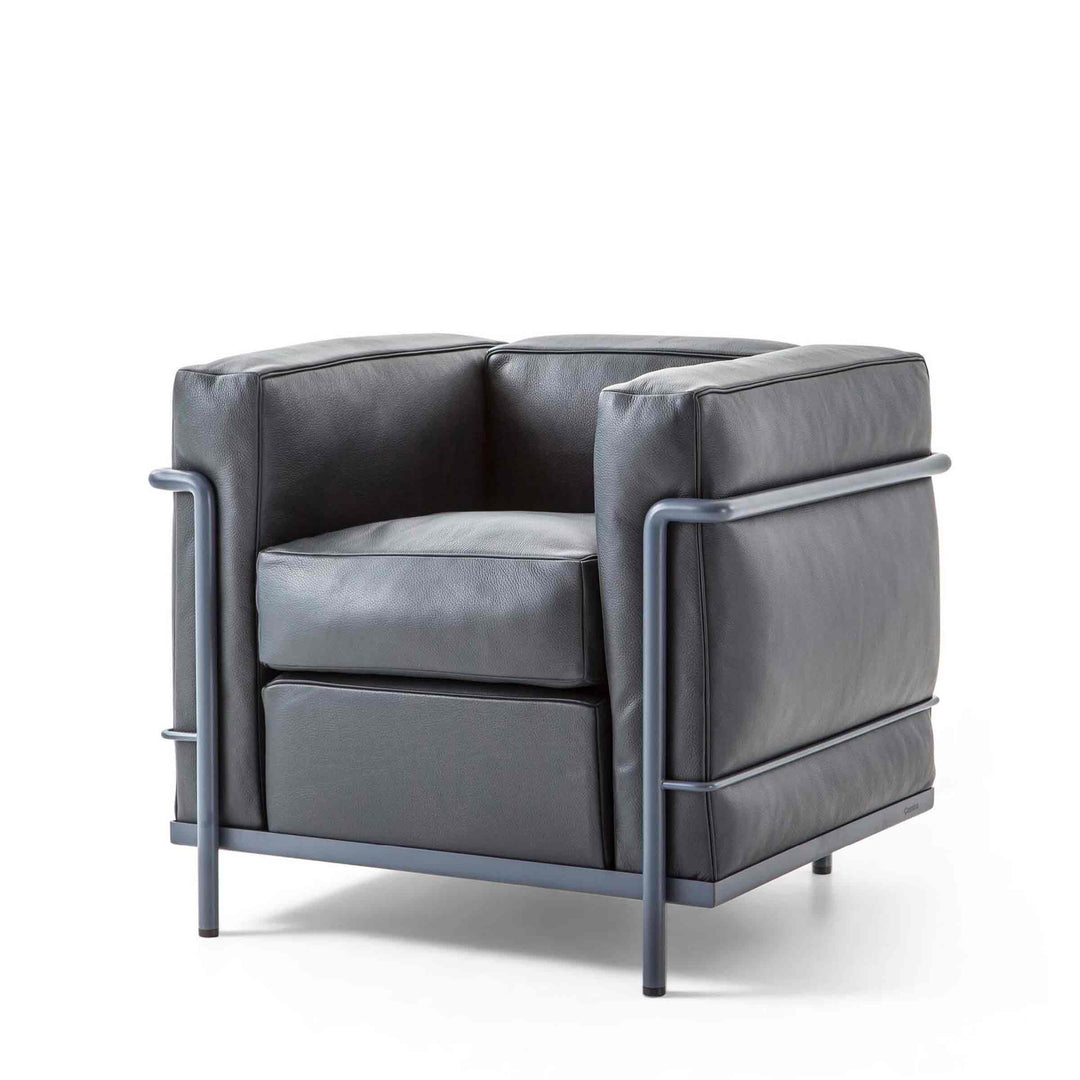
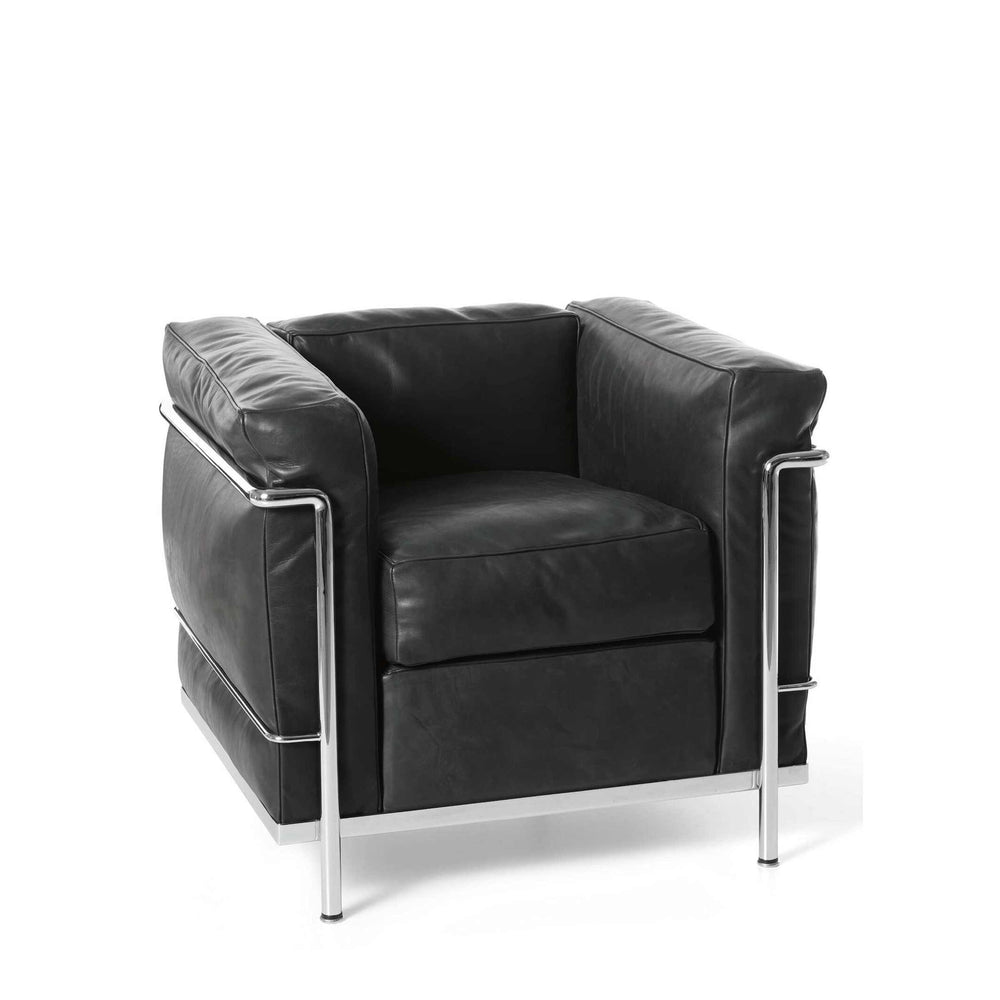
Armchair - "2, Fauteuil Grand Confort, Petit Modèle", designed by Le Corbusier, Pierre Jeanneret, Charlotte Perriand for Cassina 01
Armchair - "2, Fauteuil Grand Confort, Petit Modèle", designed by Le Corbusier, Pierre Jeanneret, Charlotte Perriand for Cassina 02
Armchair - "2, Fauteuil Grand Confort, Petit Modèle", designed by Le Corbusier, Pierre Jeanneret, Charlotte Perriand for Cassina 03
Armchair - "2, Fauteuil Grand Confort, Petit Modèle", designed by Le Corbusier, Pierre Jeanneret, Charlotte Perriand for Cassina 04
Armchair - "2, Fauteuil Grand Confort, Petit Modèle", designed by Le Corbusier, Pierre Jeanneret, Charlotte Perriand for Cassina 05

Armchair - "2, Fauteuil Grand Confort, Petit Modèle", designed by Le Corbusier, Pierre Jeanneret, Charlotte Perriand for Cassina

Made to order - Terms and Conditions
Ready in working days:
Shipping calculated at checkout
Regular price €7.808,00
/
"WINTER20"
"WINTER15"
Colors
Book a Call To request an appointment for a bespoke consulting
Add To Wishlist
100% Made in Italy

100% Made in Italy

Secure Payments

Secure Payments

Insured Shipping

Insured Shipping

Excellent Rating

Excellent Rating

Timeless, unique, and profoundly authentic, the 2, Fauteuil Grand Confort, petit modèle armchair has played a role in the history of furniture design, becoming a worldwide icon.

Created to enhance conversation, this armchair was exhibited at the Salon d’Automne in Paris in 1929 as an archetype of the modern conception of furniture, dubbed “domestic equipment” by its creators. The separation of the metal frame from upholstery expresses the Rationalist approach, this same separation responds to the logic of industrial manufacture while also evoking the architectural relationship between the load-bearing structure and the walls.

Leather Upholstery pictured: Grey cod. 13Z304, Black LCX414, Brown 13Z367.

Fill out the form below to get in touch with customer service for other available upholstery options.

Technical Sheet

Product Details

Color: Black, Brown, Grey

Material: Leather, Steel

Dimensions (cm): H 76 x W 70 x D 48

Dimensions (in): H 29.9 x W 27.6 x D 18.9

Seat Height (cm) 48 - (in) 18.9

This site is protected by hCaptcha and the hCaptcha Privacy Policy and Terms of Service apply.

Design Italy is committed to shipping your order as quickly as possible.

  • On each product page, “Ready in X working days” indicates the time needed by the producer to prepare the product for shipment.
  • The Delivery Time is assigned by Design Italy to provide the safest and most convenient shipping option: Bulky items are shipped with standard delivery times that vary by geographic area. Smaller items are shipped via express delivery, also varying by area. Delivery times are indicated at checkout and in the order confirmation.
  • If a faster delivery is required, Design Italy can provide a separate express shipping quotation.
  • Total Shipping Time = Ready in working days + Delivery Time.

For customised or made-to-order items, shipping times are estimated by our Customer Care Team, who will keep you updated on the production and delivery status.
Always check the shipping information on the product page before purchasing.

Find more details about Shipping and Returns here

Charlotte Perriand

Designer

Charlotte Perriand

Charlotte Perriand (1903–1999) was one of the most influential figures in 20th-century design, known for seamlessly combining modernist aesthetics, technical innovation, and social commitment. Trained at the École de l’Union Centrale des Arts Décoratifs in Paris, she quickly gained recognition with groundbreaking projects such as the famous Bar sous le toit, which caught the attention of Le Corbusier.

She was subsequently invited to collaborate with Le Corbusier and Pierre Jeanneret at the Rue de Sèvres studio, where she contributed to the creation of some of modernism’s most iconic furniture pieces, including the LC1, LC2, and LC4 chairs, often credited as co-author.

Perriand’s design approach combined a rational, functional vision of space with a profound respect for natural materials and the social role of design. From the 1930s onward, her work embraced new influences, such as Japanese craftsmanship and vernacular cultures, anticipating many themes central to contemporary design.

This collection curated by Cassina revives the formal rigor and constructive intelligence that characterize her oeuvre. Pieces like the Accordo coffee table, designed in 1985, illustrate the maturity of a designer who remained true to her principles while constantly renewing her vision.

Charlotte Perriand’s legacy continues to influence contemporary design through her ability to unite ethics, aesthetics, and functionality in a poetic vision of living.

Le Corbusier

Designer

Le Corbusier

Le Corbusier: Architect, Designer, and Modernism Innovator

Charles-Édouard Jeanneret-Gris, known as Le Corbusier, was a renowned architect, urban planner, and designer whose significant contributions to modern architecture and design earned him numerous awards. Le Corbusier's work in Italy played a pivotal role in his career, where his innovative ideas were well-received and celebrated. During the 1930s, he completed several architectural projects in Rome, Florence, and Milan, leaving a lasting impact on the Italian architectural landscape. Le Corbusier's architectural philosophy was greatly influenced by Italy's rich artistic and cultural heritage, and his work in the country solidified his reputation as a visionary and master of modern architecture.

His collaboration with the renowned Italian furniture brand Cassina, played a pivotal role in popularizing his innovative furniture designs. In the late 1920s, Le Corbusier, along with his cousin Pierre Jeanneret and the talented designer Charlotte Perriand was a groundbreaking partnership that revolutionized the realms of architecture and design. Together, they co-created iconic furniture pieces that perfectly complemented Le Corbusier's architectural vision. Their collective efforts led to the development of revolutionary furniture designs, such as the celebrated LC4 Chaise Longue and the LC3 Grand Confort Armchair. Le Corbusier, Pierre Jeanneret, and Charlotte Perriand were renowned for their designs that incorporated clean lines, functionality, and the beauty of leather. Their collaborative work and shared vision for the future of design left an everlasting legacy in modern architecture and interior design, inspiring architects and designers worldwide. Explore their innovative creations and timeless influence on design today.

Explore the visionary designs and lasting impact of Le Corbusier, a renowned architect whose groundbreaking contributions earned him numerous prestigious awards. In 1961, Le Corbusier was honoured with the Royal Gold Medal by the Royal Institute of British Architects. The following year, the American Institute of Architects awarded him both the Frank P. Brown Medal and the AIA Gold Medal. In 1964, the Union Internationale des Architectes (UIA) recognized his exceptional talent with the Auguste Perret Prize.

Discover more about Le Corbusier's revolutionary creations and lasting legacy by visiting our website.

Pierre Jeanneret

Designer

Pierre Jeanneret

Pierre Jeanneret (1896–1967) was a French-Swiss architect and designer whose pragmatic yet elegant approach left a significant mark on 20th-century modernism. A cousin and close collaborator of Le Corbusier and Charlotte Perriand, Jeanneret contributed to defining the visual and functional language of modern design through architecture and furniture.

Best known for his work on the city of Chandigarh in India, Jeanneret designed robust, functional furniture that harmonizes with its local context and cultural setting. His designs emphasize clean lines, natural materials, and a balance between simplicity and utility.

Throughout his career, Jeanneret demonstrated a commitment to integrating design with social and environmental realities, making his work deeply relevant both historically and today.

The Cassina reissues of his iconic pieces, such as the Kangaroo chair, celebrate his legacy, merging Swiss-French modernist vision with Italian craftsmanship.